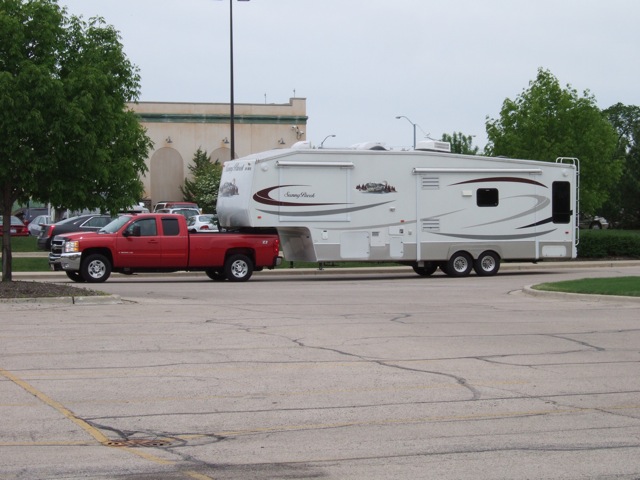
Wednesday, August 4, 2010

The Land of Gitchee Gumee


From The Song of Hiawatha

by Henry Wadsworth Longfellow


By the shore of Gitchie Gumee,
By the shining Big-Sea-Water,
At the doorway of his wigwam,
In the pleasant Summer morning,
Hiawatha stood and waited.


Although Minnehaha falls is in Minneapolis, the Shining Waters of Lake Gitchee Gumee in Longfellow’s poem about Hiawatha is actually the land of the lake Gichigami, meaning "big water", the Ojibwa (pronounced o-jib-way) Indian name for Lake Superior – and that it is. It is the largest freshwater lake in the world by surface area, is the world's third-largest freshwater lake by volume and would cover both the continents of North and South America in 1 foot of water. The Shining Waters turn gray and tumultuous on occasion and consume huge vessels such as the Edmund Fitzgerald which is memorialized in “The Wreck of the Edmund Fitzgerald” song by Gordon Lightfoot. To Chris and Jay It is a body of water that borders some of the most beautiful country they have seen thus far in their journeys.


The North Shore of Minnesota begins at Duluth, a town which in its heyday of the early 1900s had the largest income per capita in the nation due to the rich harvesting of iron ore and lumber from the surrounding land and the shipping industry created to transport it across the continent. Beautifully restored Victorian homes sit along the shoreline outside of town. The shore road continues north passing clumps of Aspen and Birch trunks contrasting starkly white against the masses of lush evergreens, fern and purple lupine the sight of which takes your breath away. The higher, rain washed elevations to the west create dozens of rivers that end in gorgeous waterfalls visible from the roadside as their frothy liquid tumbles toward the sea. Small towns with populations in the dozens dot the coastline all the way to Canada. Shops with names like Mocha Moose Coffee and Gifts, The Pie Place, Chez Jude and Bear Track Outfitting Company abound. And you know you’re in the North Country when you pass a billboard advertising Mukluks.


Lupine that grows profusely in the area.


Jay traveled this road extensively in the 1960s when he was stationed in Hancock, MI as an Electronics Technician in the Coast Guard. He was responsible for maintaining the radio beacon navigation and communication system electronics at the lighthouses and life boat stations along the western shores of Lake Superior He didn’t recognize much along the way as the road has been widened and where there were no buildings there are now houses, resorts and shops, but he remembered stopping to photograph the waterfalls visible from the roadside. Back then they did not have paved parking lots where one could pull off the road; just the road and a shoulder to stop on, take the picture and move on.


Goosberry Falls that is a stone’s throw from the highway bridge.


On Monday, June 14th, Chris and Jay drove from St. Paul to the North Shore and stopped at a campground in Schroeder, about halfway up the coast and within easy driving distance to many of the parks, waterfalls and lakes. Chris was anxious to start photographing the next day and awoke to a fog that had settled on the region. The water temperatures of Lake Superior rarely get above 40 degrees Fahrenheit so when warm winds blow over it fog is the result. Many days the fog will burn off as the sun rises, but not this day. Most people would be put off by such weather but it is one of Chris’ favorite times to photograph. The light is very soft and diffused and landscapes become surreal and mystical. She spent hours photographing along the shore just below their campsite and by the end of the day felt like she was finally doing what she’d planned to do on the Odyssey all along – photograph!! She and Jay had travelled so much in Florida, a landscape that was for the most part uninspiring to Chris, that now, ten months after they left Maryland she was finally getting her teeth into subjects that she felt excited about photographing. She ended the day with some beautiful images and soaring spirits.


Chris’ favorite image of the day - a time exposure of water flowing over rocks along the shore.


One of the largest waterfalls on the North Shore is Grand Portage, just a few miles from the Canadian border and about an hour’s drive from Schroeder. Chris and Jay headed for it on a brilliantly sunny day, not the best conditions for photographing water, but, as it turned out, that wouldn’t be a problem as the park was closed due to road and parking lot resurfacing work. As luck would have it there was another attraction in the area that they might have missed had the falls been open – the Grand Portage National Monument, located on the Ojibwa Indian Reservation, is a re-creation of the Northwest Trading Company post that thrived in the area during the late 1700s and early 1800s, before it merged with the more well-known Hudson Bay Company in 1821. Besides a beautifully done exhibit in the Visitor Center, which explained all about the trading process, the Voyageurs that transported the furs and other goods, and the lifestyles of the times, there were several other areas on the grounds devoted to the history of the post.


One had several birch bark wigwams and a square shaped, raised garden in which Margaret, an Ojibwa woman, was cultivating the soil with a hoe made from the shoulder of a moose! She explained that she was planting a Sister garden consisting of corn, squash and beans. The corn was planted in small, low mounds and, as it grew, eventually became supports for the beans that were planted around them. The beans fixed nitrogen into the soil for healthy future plantings. The squash was planted between the mounds and acted as a ground cover but also produced a plentiful food staple for the tribe. Chris was curious as to how the people stayed warm in the wig wams during the frigid winter weather and Margaret explained that they added an extra layer of birch bark and stuffed the gap in between with moss and other insulating material.


A wigwam about 8-10 feet in diameter.


Margaret with her hoe made from a Moose shoulder blade.


The warehouse building housed a collection of birch bark canoes. A fit, dark haired, bearded, middle aged man worked there in the summer making the canoes and showed us some of the fascinating, original, Indian construction techniques that he still employs today. The binding material that is threaded through the bark and around the gunnels of the vessel is created by splitting ¼” or more diameter spruce roots. His assistant demonstrated the amazingly simple technique. Further discussion with the boat-builder revealed that he was married to an Ojibwa woman and they lived, without electricity, in a cabin in the woods. He builds canoes during the summer at the Monument, manages his dog sleds in the winter and in the shoulder seasons (commonly known as mud season in the spring and fall) creates handmade gift items which he sells locally. His main transportation is a motorcycle during mild weather and a Toyota pickup truck for inclement. If the world ended tomorrow this guy would survive and we would all perish. There is truly something admirable about a person who is devoted to this simple way of life, but Jay and Chris agreed that they do love their hot running water and electrical conveniences. In the end, there are always trade-offs.


Splitting Spruce root.


The warehouse full of birchbark canoes and Jay talking with the craftsman.


In the middle of the main stockade area sat a large log structure, called the Great Hall with a smaller one housing the kitchen joined to the back via a breezeway. Volunteers in period costume explained life at the trading post in great detail – more so than Chris and Jay had ever experienced at other similar venues. One woman talked at great length about how beaver hats were made and why they were so highly prized, expensive and water-resistant. She explained how the trading post was there mainly to trade with the Indians who were the primary trappers in the area. Items such as wool blankets, metal cooking pots, firearms, traps and Venetian glass beads for decorating clothing became essential trade goods sought by the Indians.


The trading store had pelts of all different animals hanging on pegs so that you could feel the difference in their furs.


Jay and Chris is a bunk bed in the Guides and Interpreters bunkhouse.


At the kitchen, the ladies were just about ready to remove some biscuits they had baking in the ovens behind the building. They had built a fire inside the oven then, in the traditional way, tested the temperature by inserting an arm into the oven. Satisfied with the heat, the coals of the fire were scraped out onto the ground and doused with water from a nearby bucket. The pan of biscuits was inserted, the door closed and after the allotted time, voila, homemade, buttery biscuits. Visitors were not offered any but the volunteer staff was delighted to partake. The day turned out to be one of the most fun and informative of the Odyssey thus far.


The cooks with the pan of biscuits they’d just removed from the oven behind them.


The rest of the week Chris focused on photographing as much of the area as possible. She and Jay visited several of the falls along the shore, hiked an inland lake in the pouring rain, watched moose and deer cross their paths on remote roads in the Superior National Forest, paused to savor the haunting call of a Loon, marveled at the fog that drifted ashore and crept through the coastal forests and in general tried to capture and absorb as much of the experience as possible.


Another convention commitment necessitated moving the RV to Duluth on Wednesday, June 23rd. Chris needed to be near an airport that would get her to and from Orlando, FL and Jay wanted to be closer to civilization while she was gone. Although they visited many beautiful places and Chris captured some wonderful photographs during their stay on the North Shore, there never seemed to be enough time to do all that was on their list. In the big picture the life lesson is to be grateful for what you have. We truly feel blessed to be living this lifestyle.


Jay felt that Jim Croce’s song, Time in a bottle, was very applicable to their feelings of never having enough time to spend in these beautiful places they find.

Monday, August 2, 2010

Family Treasures


We’d planned to stay in St. Paul for about three weeks; a full week to visit the Minnesota Historical Society (MHS) to photograph family ancestor items, Chris was also obligated to work a convention in San Francisco in the middle of our time there, then a few more days in the area after her return to St. Paul to finalize the gathering of family history information. We’d completely underestimated the volume of papers, photos and military memorabilia contained in the MHS and other areas of St. Paul that held probate, birth and death records and even an attorney that settled the estate of a distant cousin. We extended our stay by over a week to fit it all in and still could have used more time.


During the last day’s drive to St. Paul, Chris completely organized family papers relating to her grandfather, Charles P. Clark and great grandfather, Charles Asa Clark, the two relatives whose other papers and photos were contained at MHS, into an accordion folder for easier access and research. She then spent their first day in St. Paul, Monday, May 17th, reading as much of the information as possible to grasp an understanding of their lives before viewing the items at the MHS library.


The library didn’t open until 1 p.m. on Tuesday, so, Chris and Jay spend the morning visiting the Clark family homes in the city. As Chris was photographing the home on Marshall Avenue she thought the house looked too new for her grandfather’s family to have lived in it in 1886 when he was born. A conversation with the next door neighbor revealed that indeed, the house had been moved from a location a block away several years before. Well, at least the right location had been found if not the original house.


The location of where Chris’ grandfather was born – but not the same house.


Our next stop was 1376 Summit Avenue. This house became home base for the Clark family when in town and was the residence of Chris’ great grandfather’s sister, Harriet Wheeler, her husband Rush and children – the most notable being Cleora Clark Wheeler. Cleo was an illustrator, photographer, our original family historian and a fiercely independent woman who never married and lived in the family home until her death in 1980 at the age of 98. When Chris was younger, she remembered her mother talking about Cleo and communicating with her regularly about family history information.


We found the house which appeared to be under some kind of renovation as there was a dumpster container on the front curb and the house appeared vacant. After querying some neighbors we learned there had been a fire in the house the previous February and the owners had moved to a nearby home while renovations were completed. Chris got the names of the current owners to send a letter asking if she and Jay could meet with them and see the house.


1376 Summit Avenue in St. Paul where Cleo grew up and lived.


Shortly after 1 p.m. we were registering at the MHS library and spent the next 7 hours reviewing the documents and letters of great grandfather Clark in Box 1 of 4. Chris was so excited by the information contained in the papers but also felt a little overwhelmed at the prospect of photographically documenting all of it. Most of the papers and photos no other living relatives had ever seen and she felt an obligation to photograph as much of it as she could for the family genealogy records and to share with other family members. She also wanted access to the information to glean a better understanding of who her ancestors were and what kind of lives they led.


The Minnesota Historical Society building


Thus Chris began many days of long hours at the library’s photo stand photographing over 2000 papers and photographs of family information contained in 4 boxes. Unexpected treasures she found were the Aero Club membership of her great uncle Harold Melville Clark for whom Clark Air force Base in the Philippine Islands was named in 1920; a diary of her great, grandfather’s journey from the U.S. to the Philippines during his time of service as a Lieutenant in the Spanish American War; letters from her grandfather to his father about his travels in China as well as countless other letters between family members during the early 1920s and WWII; military service records, newspaper articles and so much more.


Harold Clark’s Aero Club membership book.

Note the number of 679. He was the 679th aviator in the entire U.S.


In addition, she and Jay spent two days in the bowels of the building photographing the 3-D items of the collections consisting mainly of Charles A. and Charles P.’s military collar pins, medals, WWI field first aid kit, food containers and photographic equipment used by Charles A. and Cleo. It seems that Chris’ photographic bug has deep roots in her family. A disappointment was the unknown whereabouts of Harold Clark’s saber. There are records of it being in the MHS collection but many years before it was transferred out to an unknown entity and records at the time were not as accurate as those of today. Chris had a feeling it was sent to a museum at Clark Air Force Base but has no knowledge of where those items may have gone once the base was closed in 1991 due to the eruption of Mt. Pinatubo.


The Croix de Guerre with Silver Star medal awarded to Chris’ grandfather from his heroism during battles in France during WWI.


Balloon Pilot wings of Chris’ grandfather.


In the middle of all this Chris took a trip to San Francisco, leaving a few days earlier than the start of the convention to visit her three cousins that live in the area. She stayed with her cousin Laura, another family historian, and they spent hours perusing the documents from MHS that Chris had burned to a DVD. Meanwhile, back in St. Paul, Big Red was a mess after the hectic drive north and Jay’s Virgo was offended by being seen in a filthy truck. Red had also not had a good paste wax applied since we bought it and Jay was itching to make it beautiful again. So, while Chris was away he spent several days washing and waxing the truck one section at a time. He tackled the project in this way not only because Red is a massive machine, but because doing it all in one day would cripple his upper body muscles.


While in San Francisco, Chris was elated to receive a call from Raina Eberly, the current resident of the Summit Avenue house, in response to her letter, and made arrangements to meet with her and her husband, Brian Engdahl, the Saturday after her return to St. Paul. The visit with Raina and Brian was wonderful. They told all kinds of stories about the house and how they bought it from the attorney handling Cleo’s estate and took us over for a visit. The damage caused by the smoke of the fire, which started in the basement under the living room, was unbelievably extensive. The entire floor in the living room was ripped up and we could see into the basement. All the other floor coverings on the main and second levels were gone and the kitchen and all bathrooms were completely gutted. Our hearts went out to these kind people and we wished them well in dealing with the long road ahead of completely rebuilding their home.


The rest of the week was spent visiting the city library and learning all kinds of information about Cleo’s life, printing out probate records from the courthouse and visiting with Cleo’s estate attorney, John Hughes. He had lots of information about Cleo and even had in his garage boxes of the engraved plates she created for her Christmas cards, bookplates, photos and other items. We arranged to get some samples from him and Chris would photograph them and contact the MHS to see if they would want to add them to their collection of Cleo’s other items. We even discovered that items from the Philippines, originally in the MHS Clark collection, had been transferred to the local Science Museum. It seemed that every time we uncovered information about one thing it opened up a whole new direction in which to learn and document more items. We could easily have spent the entire summer in St. Paul doing nothing but genealogy research but considering the time we had Chris was ecstatic with the discoveries and the information she had been able to gather.


One of the engraved plates Cleo created for a Christmas card.


A protective sleeve for the plate above with the print it makes.


Jay was able to drag Chris away from photographing and researching long enough to visit the Mall of America! Chris was skeptical about what could be so great about a mall, but both of them were impressed by the sheer size of it, not to mention that there is an amusement park, complete with roller coaster, in the centrally located atrium with a roof height of easily 80’. They were there the better part of a day and, despite their valiant effort, still didn’t see everything.


We were there!


We wouldn’t have believed it if we hadn’t seen it – a roller coaster in a mall.


Their last day in St. Paul they actually did some sightseeing. It is a beautiful state capital city and Summit Avenue has the largest number of restored homes in the country. We did a walking tour of the Avenue ending at the St. Paul cathedral, a magnificent, early 20th century, stone structure sitting atop one of the highest points in the city. The MHS had a wonderfully done exhibit of Minnesota residents recollections of WWII that Jay just had to see. Chris chuckled when she saw a flour sifter in the 1940s era kitchen display that was exactly like one she has. Remember that she rarely gets rid of anything that is still useful.


The St. Paul Cathedral rivals, in beauty, any in the world.


Exhausted from such intense research, but wanting to do more, campground reservations beckoned us to our next destination. On Monday, June 14th, almost a month after our arrival, we left the Clark family behind and headed for the stunningly beautiful North Shore of Minnesota and the land of Gitchee Gumee.

Ancestral Discoveries

Although we loved visiting with friends and exploring the rivers in Florida, after wintering there for two straight years, we were elated to finally be heading elsewhere. Jay spent time in Michigan’s Upper Peninsula early in his Coast Guard career and thought it would be a wonderful place for Chris to photograph. Chris reasoned that if they were going that far north for the summer they might as well stop by St. Paul, Minnesota where her grandfather and other relatives used to live and take photos of family items held at the Minnesota Historical Society (MHS). She gathered together genealogy papers of her family to read through during the long, multi-day drive in preparation for visiting the MHS so that she would know what items to request and photograph for the family records. Little did she know what was in store for her.


At a small family reunion a couple of years earlier her cousin, Laura, had compiled a notebook for each attendee that contained pages of photos and other family information. Chris decided to read its contents, while Jay drove, and found photos that she recognized from her childhood of her great, great and great, great, great grandparents. Laura had copied the photos on separate pages along with the information about who they were, when the photos were taken and where they lived and died underneath each photo. It was fortunate for Chris that Jay had upgraded his cell phone to a new Blackberry with internet browsing capability just a week before, as she immediately started searching the web for the locations of the Illinois towns listed for their births and deaths. The first day of their drive, Chris discovered the name of the cemetery where the relatives in the photo were buried was west of Chicago, a city they would pass on their way to St. Paul. The decision was made to drive longer days so that they would arrive in the Chicago area soon enough to visit the Garfield Cemetery in Wasco, IL.


We passed many fields full of these gorgeous yellow flowers while passing through Indiana.


After two days of ten plus hour drives they arrived at a Wal-Mart south of Chicago, bumped out the slides and crashed. The next morning they followed the route, via the Google Map on Jay’s Blackberry, to Wasco in search of the cemetery. As they neared the location Chris saw headstones atop a hill in the distance and squealed with excitement. The anticipation of the find mounted as they made the final turn up a gravel road and ascended the hill. At the top they found the Garfield Farm on the right and the immaculately kept Garfield Cemetery to the left, the drive flanked by two, concrete capped brick pillars. Since the farm appeared to be of a historic nature, Chris and Jay approached the door to what appeared to be an office. Two staff ushered them inside and, after a brief conversation as to why they were there, they produced a small notebook listing the graves and their locations. While flipping the pages searching for the Clark relatives, Chris also noticed the name Shaw, the maiden name of her great, great grandmother, Rhoda Shaw. She’d struck gold. Not only were her great, great grandparents, Charles Asa and Rhoda Shaw Clark buried there, but Rhoda’s parents and siblings as well!


The Garfield Farm was owned by relatives of James A. Garfield, the 20th President of the United States.


A donation for the farm and many gracious thanks was left with the most helpful staff then Chris and Jay practically ran across the street to locate the graves from the map they were given of the grounds. In no time they’d found them in the first few rows of headstones. There they were. She envisioned their faces that had peered at her from photographs over one hundred years old when, as a child, she found them in a chest drawer, at the time marveling at the age of the photos and the information typed on the back which made the ancestral connection from them to her. Tears of joy and sorrow welled up as she felt the magnitude of her discovery. Tears of joy at finding them and the contribution she could then make to the family tree that others had been working on for years, and sorrow for not knowing anything more about them than their names and where they were buried. She silently vowed to search for more information and immediately called her cousins, who had more actively pursued their family’s history, to share the discovery.


The photos that started it all:


Jesse and Delight Shaw, Chris’ great, great, great grandparents.


Asa and Rhoda Clark, Chris’ great, great grandparents.


Chris presumed the Shaw family was one of note in the community as there was a huge tombstone engraved with only the name Shaw. Smaller headstones of Jesse and Delight Swan Shaw, Chris’ great, great, great grandparents were close by along with five other Shaw relatives, whose connections to the family she had yet to discover.


The Shaw family plot at Garfield Cemetery.


She took lots of photos of the entire plot and individual headstones as well as views of the surrounding area while Jay walked the grounds searching for other familiar names on headstones like Burr and Wheeler. While in the farmhouse, the staff told us of the connection of the Garfield family to the family of the Revolutionary war hero and Vice-President, Aaron Burr and we also noted a 19th century photo of an older woman with the middle name of Wheeler, a name with which Chris was familiar in another line of her family. She pondered the possible connections and mentally filed the information away for further study.


Friends of Jay’s from his cruising days, Barry and Diane Wallace live in the Chicago area. Jay had not seen them for over 10 years and we’d made arrangements to meet Barry for lunch (Diane was detained and couldn’t make it). Chris reluctantly got into the truck cab for the trip to meet him but wished she had a few days to remain in the area and research property, birth and death records for more information about the relations she was leaving behind. She was hopeful that what she might find in St. Paul would shed more light on their lives.


Chris had never met Barry but had always heard so much from Jay about him and his family from the days when they chartered his boat in the Virgin Islands. We had a wonderful lunch, each of us telling all kinds of stories that spanned the years gone by. Then it was back on the road to a nearby campground before heading out in the morning for the last leg of our journey to St. Paul.


Jay and Barry outside the restaurant where we had lunch.


Barry took this photo of us as we pulled into the restaurant parking lot.


If you’ve ever flown across this great nation of ours, you know that it is about 3,000 miles wide and it takes about 7-9 hours in a jet to span its breadth. Driving it is something else. You really gain an understanding of how vast and beautiful it is. Interstates are not our routes of choice but at least they are reasonably fast and get us from point A to point B. The point of all this is the last leg of the journey from Illinois to St. Paul, MN was still one heck of a haul at over 360 miles. It was an eight hour drive, with frequent pit stops to stretch our legs, before we arrived at a beautiful, privately owned RV park about 10 miles east of the city. After a grueling day on the road, it is the most wonderful feeling to pull into a quiet, well-maintained, secluded, RV park with colorful blossoms gushing from planters and be greeted by smiling faces whose owners truly make you feel that they are glad to see you. Thus we arrived at St. Paul, home to Chris’ maternal Clark family line, on Sunday, May 16th.


A welcome sight after a long day on the road.

Sunday, July 4, 2010

Playing in the Panhandle

Our friend, Michel Laxson, with whom we paddled the Silver and Oklawaha Rivers earlier in the spring, has a waterfront home in Freeport where she likes to spend weekends during the summer. She invited us to participate in two river paddles that a local kayak club had organized for the upcoming weekend. So, Saturday we met her at her house, loaded the boats and headed for the put-in location at Vernon, on the Holmes River, about an hour’s drive to the northeast. The river was at flood stage and many areas of shoreline were completely submerged and were deep enough for us to paddle between the trees poking out of the murky, brown water like rebar in a concrete pillar. The high water also made navigation difficult as the banks that defined the river were gone. Fortunately the trip leader knew the way and we just relaxed into a steady stroke and enjoyed the ride on a gloriously warm, sunny day.


Solid ground would normally be visible at the base of these trees.


Note the “redneck canopy” mounted on the front of this vessel.


Jay and Chris were in separate kayaks and, as usual, Jay lagged behind a bit taking his time and looking for interesting critters. He struck gold when he spied a grayish-brown snake clinging to a tree just above the water. Unable to control himself he found a plastic bag in his kayak and stuffed the reptile inside. Chris just sighed and rolled her eyes figuring they would sort out the poor creature’s fate before leaving Florida. Michel contributed to the snake’s comfort by donating a large, plastic cat food container, with a secure lid, for a temporary home. Chris dug out an old, soft hand towel and bunched it up in the bottom for some warmth. Thus “Vern” may not be very happy but at least he was comfortable.


It’s a bit out of focus (Jay took the photo) but it is Vern on the tree before Jay “sacked” him.


Michel in the kayak and other members of our party.


Our second paddle with Michel was on the Econfina River on Tuesday, May 11th. Each river we had been on was unique in its feature and the Econfina’s was high banks dripping with masses of lush, green fern, dotted with the white flower clusters of Oakleaf Hydranea. We paddled up narrow channels to several springs that fed crystalline water into the main river which had turned a muddy brown due to the sediment washed into it by the recent rain. There was a distinct line where the clear water of one large spring met the main flow. We eased down the river at a leisurely pace stopping at a little beach along the way for a snack and pretty much wasted the whole day having a wonderful time! How could our lives be any better? Oh, I know, we could win the lottery!


We paddled up one spring where the water was so crystalline you could see details in the roots of this cypress tree.


Notice the line where the brown water of the main spring meets the clear of another that feeds into it.


A view of this gorgeous river.


Michel resting near a bank of lush, fern.


As many of you know we are now Florida residents with a mailing address in a small, panhandle town named Crestview. As luck would have it Crestview is less than 20 miles from Niceville. We just had to pay our mailing service a visit to meet the people that take such good care of our mail. The operation is housed in a 20’ x 20’ room in one section of a small, one-story office building; the wall coverings consisting of a couple hundred dark gray, square cubbies for the client’s mail. We were warmly received by the two person staff and we can now honestly say that we’re from Crestview.


The water tower in our “home” town.


One of Chris’ passions is gardening and she brought along potted herbs to use in her cooking. In North Carolina she bought two pots of salad greens which we consumed in a short time so, she planted lettuce and spinach seeds to replenish the supply. They were decimated by pests, including a peacock in Miami and squirrels at every park where we stayed, who seemed to prefer digging in her pots to the expansive, surrounding acreage. Her imagination worked overtime creating solutions to the problem. Crunching up aluminum foil and placing it around the established herb plants seemed to work but she couldn’t use it over newly planted seeds as it would block the sunlight. She tried a variety of other deterrents to no avail. The day before we left Niceville she decided to try one last solution before giving up on the project entirely. After planting new seeds she stuck plastic forks all around the pot rims with the tines pointing outward. She then arranged the pots on the picnic table at the campsite, so that the squirrels would have difficulty accessing them. The next morning all was intact so there was hope we would be enjoying home grown salad greens in the near future.


Jay had been pondering Vern’s fate for almost a week; should he keep him or not? There were pros and cons to the decision. Jay’s pros were he’d most likely live a longer life in captivity since Jay would feed him regularly, and he wouldn’t be in danger of becoming a meal for a hungry hawk! The cons were he would be removed from the freedom of his natural habitat and contained in a terrarium. The RV has very little space to accommodate even a small terrarium. How often would we be near a pet store to obtain mice for his food, and finally, we were headed to the colder regions of the country and, if Jay did have to release him for some reason, he probably could not survive in an environment other than that found in Florida. The day we left Florida, Jay decided to release Vern, much to Chris’ relief. She assured him that when they settled in back at home he could get a pet snake if he so desired.


Five months after entering the state of Florida we departed for points north on Thursday, May 13th. We had decided to head to St. Paul, MN where Chris’ grandfather lived in his youth and spend two weeks investigating items of her family’s that reside in the Minnesota Historical Society. We were not looking forward to the four day journey on interstates since we’d so much enjoyed meandering along the back roads of Florida. But, our long-term plans to spend the summer exploring the Upper Peninsula of Michigan warranted us getting north as soon as possible.

Jewels of the Emerald Coast

Friends are like jewels that bedeck our lives with sparkling conversation, glistening moments of happiness and enduring love. Much to our joy they are sprinkled about the country and we love to stop and visit, share a meal, exchange hugs and pass on new stories strewn with laughter.


We had not seen Evette Tanguay since the Pterodactyl Roost in Miami in 2001. She now lives in a nice home on a small lake in Panama City where we passed an afternoon with her and Jay reminiscing about their times in Puerto Rico, Mobile and Washington, D.C. when her husband, Joe, was Jay’s boss.


A friend of hers is on a vegan diet. When Evette learned that Chris was as well, she immediately called her friend. She and Chris shared the benefits of their vegan diet experiences and hoped that a similar commitment on Evette’s part would ease her arthritis pain.


The following day we again headed to Panama City for a visit with Chan Lipscom who had chartered Jay’s sailboat many years ago. Lana Williamson, his wife, is a photographer and he buys fixer-upper houses, renovates then sells them. One he bought last year, in a business district, was a perfect location for Lana’s photography studio. Months of renovation later, half of it houses a reception area and two separate portrait studios and the other half a hair salon. The idea is that portrait customers would get their hair and makeup done there prior to their photo session. During our tour he related the trials of the project but it all turned out so beautifully, who would know!


This is the building they renovated for Lana’s studio.


Lana joined us for lunch at a nearby waterfront restaurant where Jay got his meat fix for the week. Then Chan took us to another home he was renovating that was just about ready to put on the market. He said it was in pretty good shape when he bought it (read he didn’t have to empty the contents into a dumpster) so, painting, refinishing floors and upgrading the bathroom and kitchen was all that was needed. All in all, our visit with them was an interesting and enjoyable experience.


Jay, Chris, Lana and Chan in front of the studio.


Late in the afternoon, we said our goodbyes and headed to Grayton Beach and a rendezvous with Karen (pronounced car-en) Kolenberg, a friend of Chris’ from Maryland who moved to Freeport a few years ago. She and her boyfriend, Duane, were at an art festival kick-off party and had invited us along. We found them at an outdoor cafĂ© listening to two musicians who took turns playing their own compositions; the man, a Cal Ripkin look-alike, played humorous country songs on guitar, and the woman, sad and soulful songs on an electric keyboard. At dusk we drove a short distance to the silky, white quartz sandy beach of the Emerald Coast to enjoy the soft breezes and sunset. Due to the recent heavy rains a dune pond had broken through the sand and a channel of brown water co-mingled with that of the clear, blue-green ocean. Workers were busy stretching an orange, floating oil barrier across the newly created channel to protect the pond from the impending Deepwater Horizon oil slick creeping toward the coast. Two heron waded through the shallow water, waiting patiently for their evening meal to blunder within striking distance, their silhouettes dark against the orange sky. Although we are boat people and not necessarily beach lovers, we understand why so many people are attracted to this area during their retirement years. It truly is a paradise.


Duane and Karen on the beach.


Sunday was Mother’s Day and Karen and Duane had invited us for brunch and a day at the Art Quest Festival in Seaside, a planned beach community of quaint, early 1900 Floridian style homes and condos painted in soft shades of yellow, blue, green and white. It was the 23rd year of the festival and it attracted nationally accomplished artisans of all types from pottery to bronze sculpture to paintings in all mediums. Chris was inspired by the technique of capturing beach scenes by an exhibiting photographer. It was a subject matter that she had not been drawn to previously but now has some fresh ideas to try out.


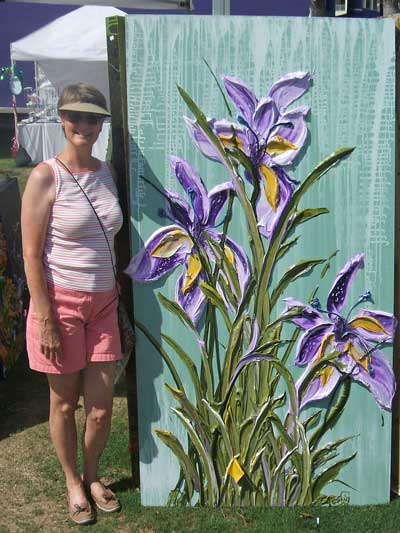
Chris standing next to a painting she liked.

It became a six foot tall, 3-dimensional work of art because of the amount of paint the artist used.


We returned to Karen’s home and hopped on Duane’s jet boat for a cruise up the nearby river to a waterfront biker bar that hosts live music on Sunday afternoons. We arrived too late for the entertainment but enjoyed a nice boat ride on a gloriously beautiful day.